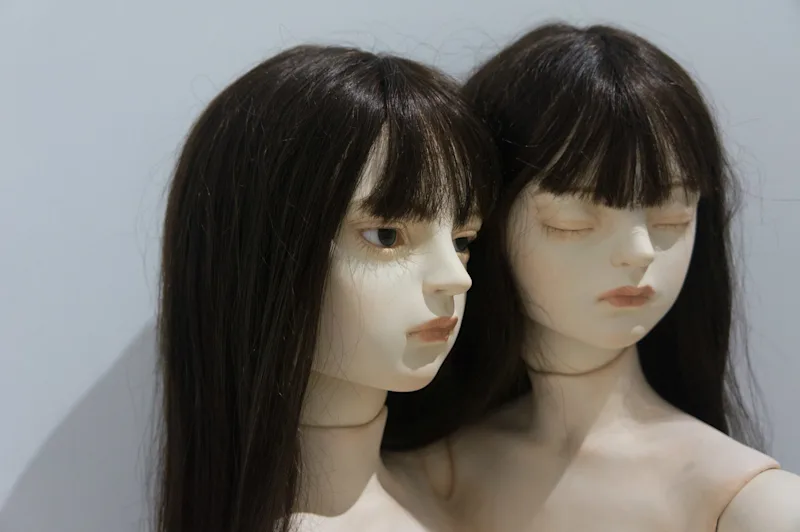
Sato Raimu works with the human body through the making of dolls. This practice does not originate from metaphor or symbolic representation. Sato independently acquired ball-jointed doll–making techniques as a method for understanding how a body can be constructed, articulated, and sustained. This inquiry continued through formal training in human sculpture at Tokyo Zokei University and was further developed through anatomical research conducted in medical school laboratories. Across these contexts, the body emerged not as an image to be idealized, but as a structure defined by articulation, exposure, and fragility.
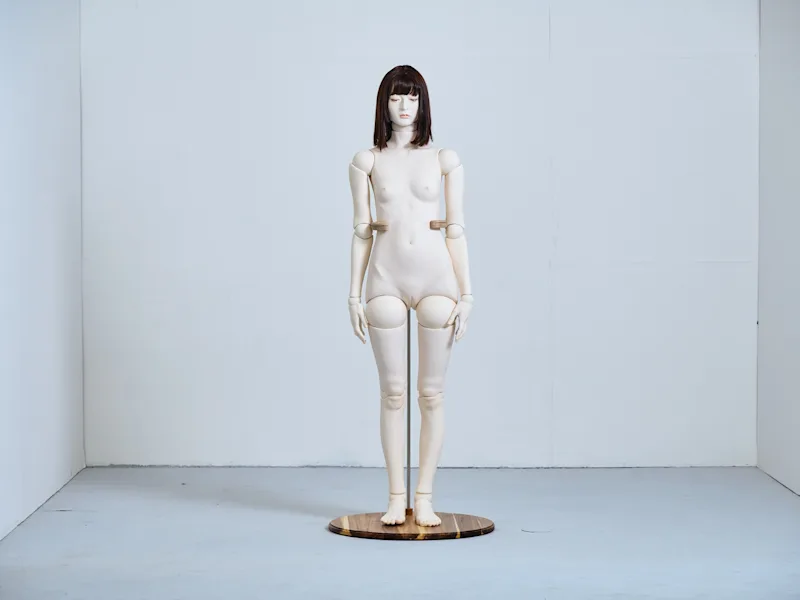
The life-sized works produced by Sato are unmistakably dolls. Spherical joints remain exposed, and the logic of articulation is never concealed. Illusion and lifelikeness are not pursued. What is presented instead is a body whose structure is fully legible—assembled, connected, and held together by visible points of vulnerability.
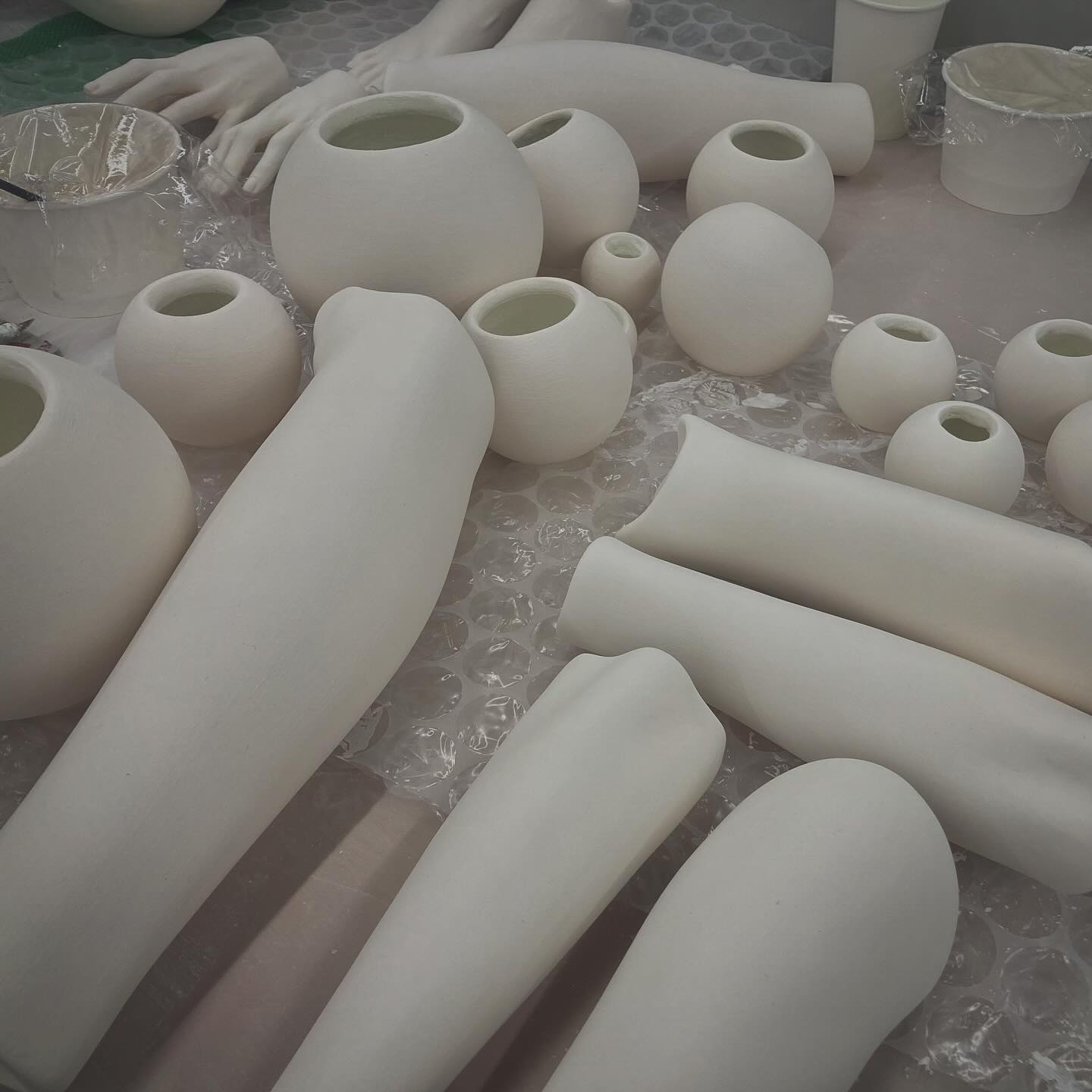
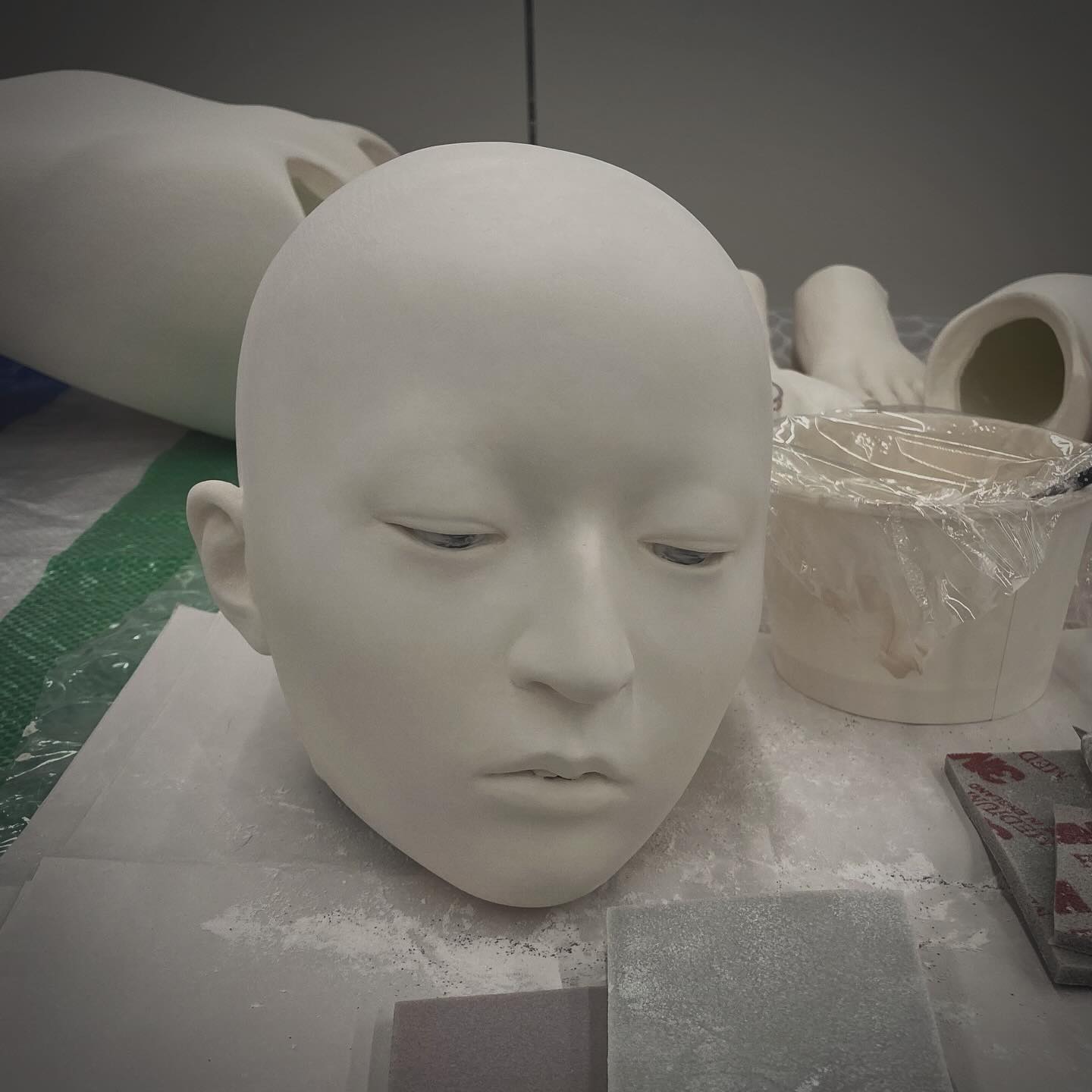
Each figure is constructed using stone powder clay as a structural base. Once cured, the material becomes rigid and non-absorbent, forming a stable substrate. Oil paint is applied not to animate the surface or simulate flesh, but to register the body at a specific moment of completion. Color functions as a trace of presence rather than an assertion of vitality. Human hair is implanted using established doll-making techniques, without painterly intervention, situating the work within the lineage of articulated doll production rather than sculptural illusion.
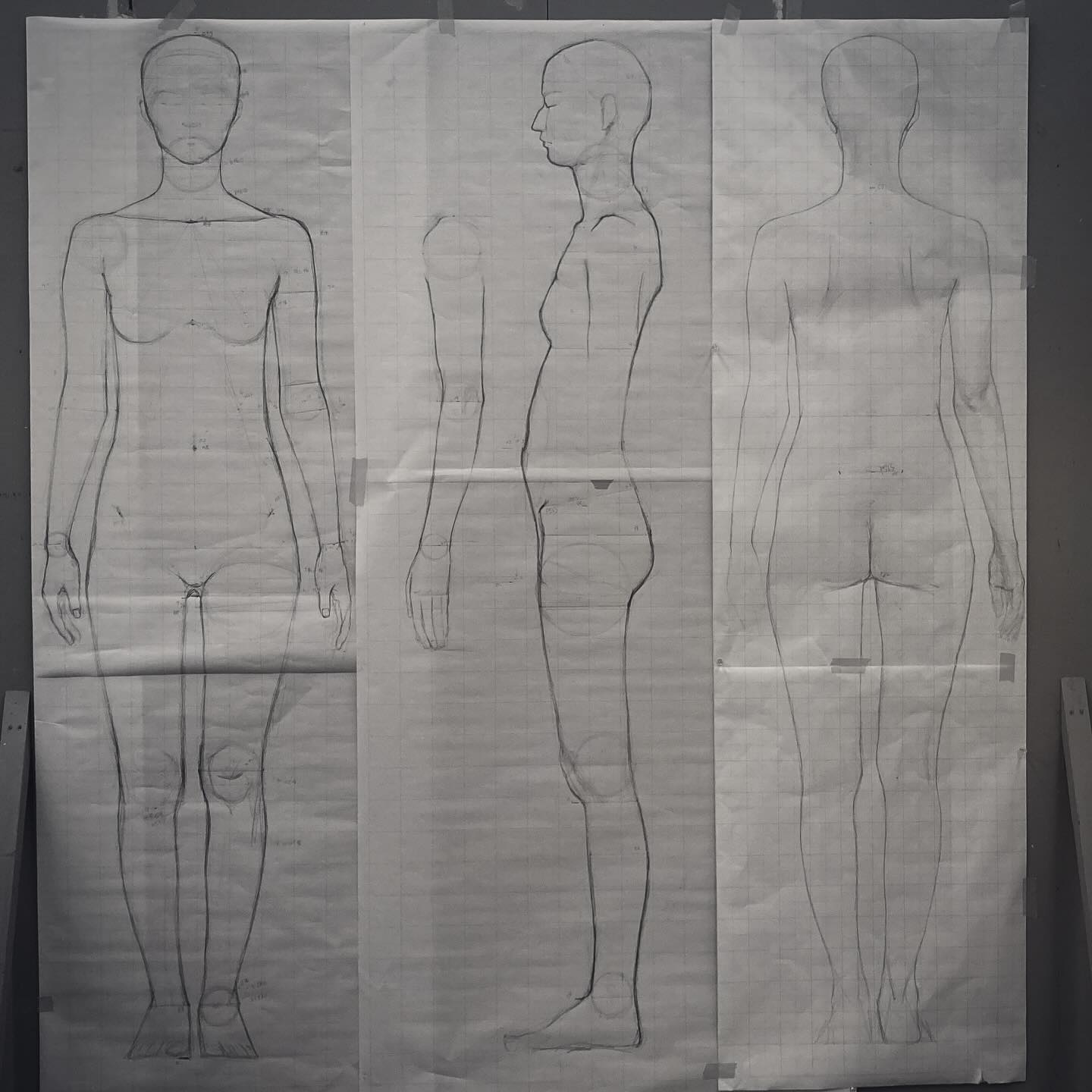
All figures are measured precisely to human life-size proportions. There is no intentional distortion or exaggeration of anatomy. What differentiates these bodies is not deviation, but exposure. Joints interrupt continuity, articulation remains visible, and the logic of construction is never hidden.
Fragility is understood by Sato as a layered condition. One dimension is physical: the susceptibility of joints and connective structures that enable movement while remaining points of weakness. Another is ontological: the instability of the subject that arises from inhabiting a material body continuously positioned in relation to others and to society. The structure of the ball-jointed doll brings these dimensions into direct contact.
The life-sized figures are not posed. They stand upright and motionless. Pose is understood as narrative, and narrative is deliberately withheld. These works do not function as characters or representations of individuals. They operate closer to anatomical presentations—bodies assembled, articulated, and fixed in place.
Smaller doll works may be handled, dressed, or repositioned, acknowledging a different register of engagement. This distinction reflects Sato’s ongoing inquiry into how scale, articulation, and visibility shape the conditions under which a body appears.
By employing the clarity of doll structure, Sato does not reduce the human body to a mechanical system. Instead, structural exposure becomes a means of questioning what remains invisible when the body is approached solely through scientific or analytic frameworks. Emotions, memory, and care persist, even when they cannot be isolated or fully described.
The dolls produced by Sato are neither substitutes for human bodies nor symbolic stand-ins. They exist as others—exposed, motionless, and unresolved—continuing to pose the question of what it means for a body to be assembled, to appear, and to remain standing before us.
Making Process Documentation of the construction and articulation of a life-sized figure.