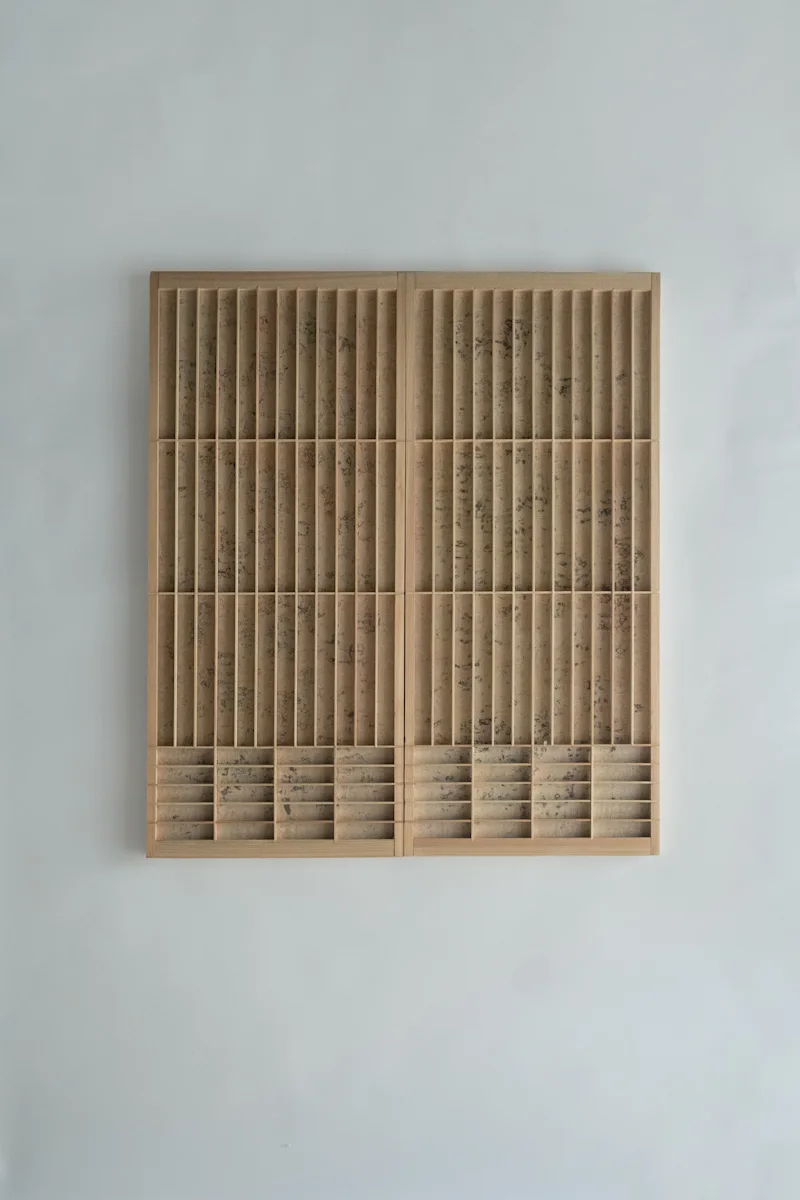
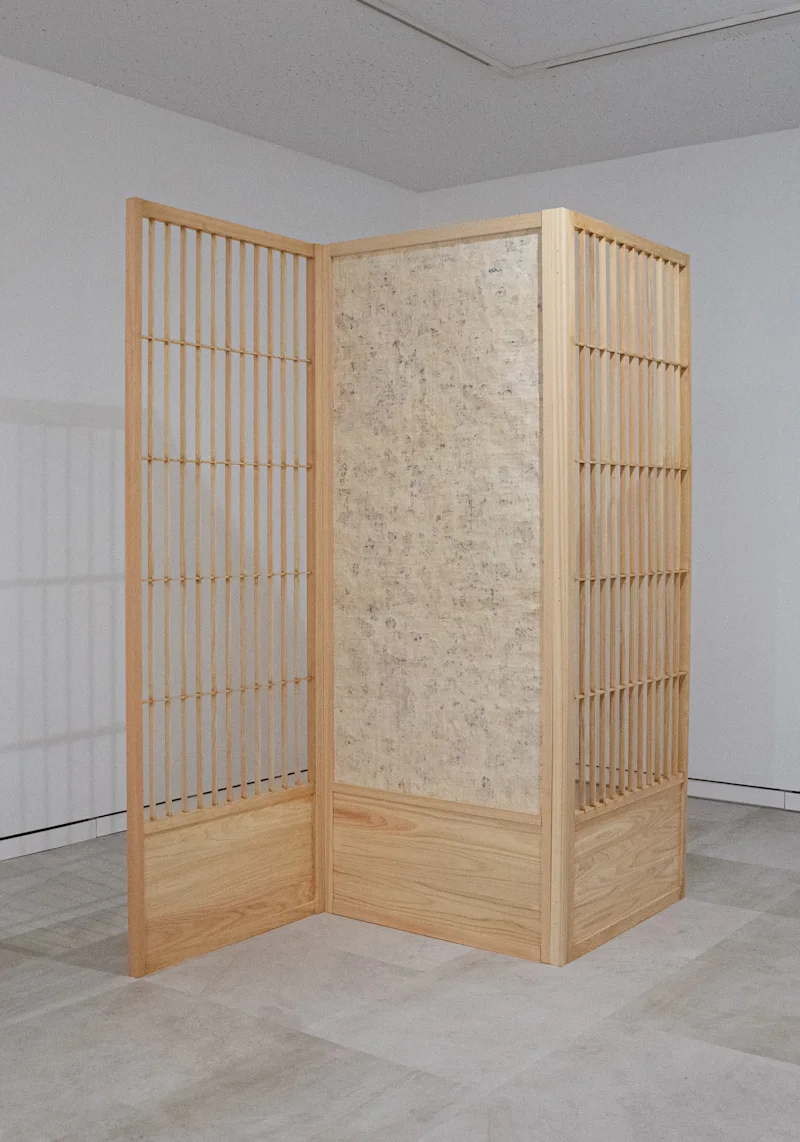
Hanzawa Tomomi works with paper and fibers to explore how human existence is shaped, sustained, and transformed through relationships with others, time, and environment. The practice does not approach paper as a neutral support or decorative surface, but as a structure formed through the intertwining of fibers—a physical process that parallels how lives take shape through accumulated interactions, traces, and encounters. Paper, in this work, is not a background for expression but a site where presence, absence, and connection are materially negotiated.
Central to Hanzawa’s thinking is the understanding that human existence is not a fixed state, but something continuously formed through contact. Just as fibers gather, separate, and rebind in the making of paper, relationships leave uneven layers, tensions, gaps, and densities within a life. The works allow these processes to remain visible. Surfaces hold thickness and fragility at once; structures reveal both cohesion and vulnerability. What appears is not a representation of relationships, but their residue—made tangible through material process.
Papermaking itself forms the core of the artist’s inquiry. Having engaged with papermaking traditions across Japan, the United States, Mexico, and Canada, Hanzawa approaches the medium not as a predetermined object, but as something that comes into being through interaction. Fibers respond to water, pressure, and movement according to their own tendencies; outcomes cannot be fully anticipated or controlled. Rather than mastering the material or executing a fixed plan, the artist works by attending closely to how paper forms itself through these conditions. The work emerges through a balance of intention and responsiveness, involvement and release.
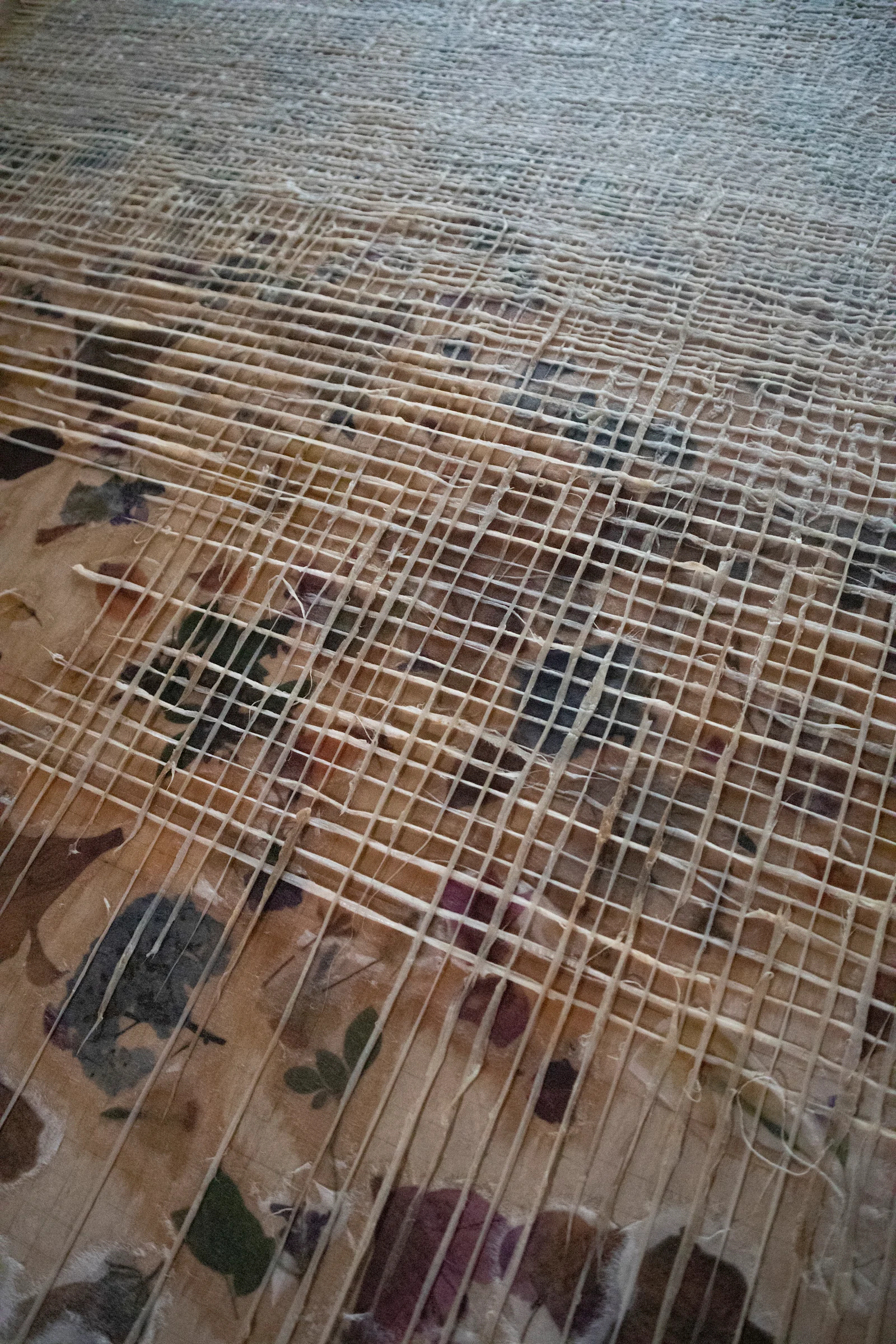
This attitude toward making aligns with what can be described as a middle-voiced practice. In ancient Greek grammar, the middle voice referred to actions in which the subject is neither an external agent imposing will nor a passive recipient of forces, but is situated within the process itself. To act in the middle voice is to be implicated in what unfolds—to participate without full command. Hanzawa’s papermaking operates in this register. The artist does not force material into compliance, nor simply surrender to chance. Instead, the artist remains within the unfolding process, responding as form takes shape through a dynamic relationship between human action and material behavior.
Within this middle-voiced approach, paper is understood not as static matter but as something continuously becoming. Even after a work is formed, it retains the capacity to change—reacting to humidity, gravity, and time. This openness is not treated as a flaw to be corrected, but as a condition to be acknowledged. The work does not aim for permanence or closure. It holds a state of ongoingness, where stability is provisional and transformation remains possible.
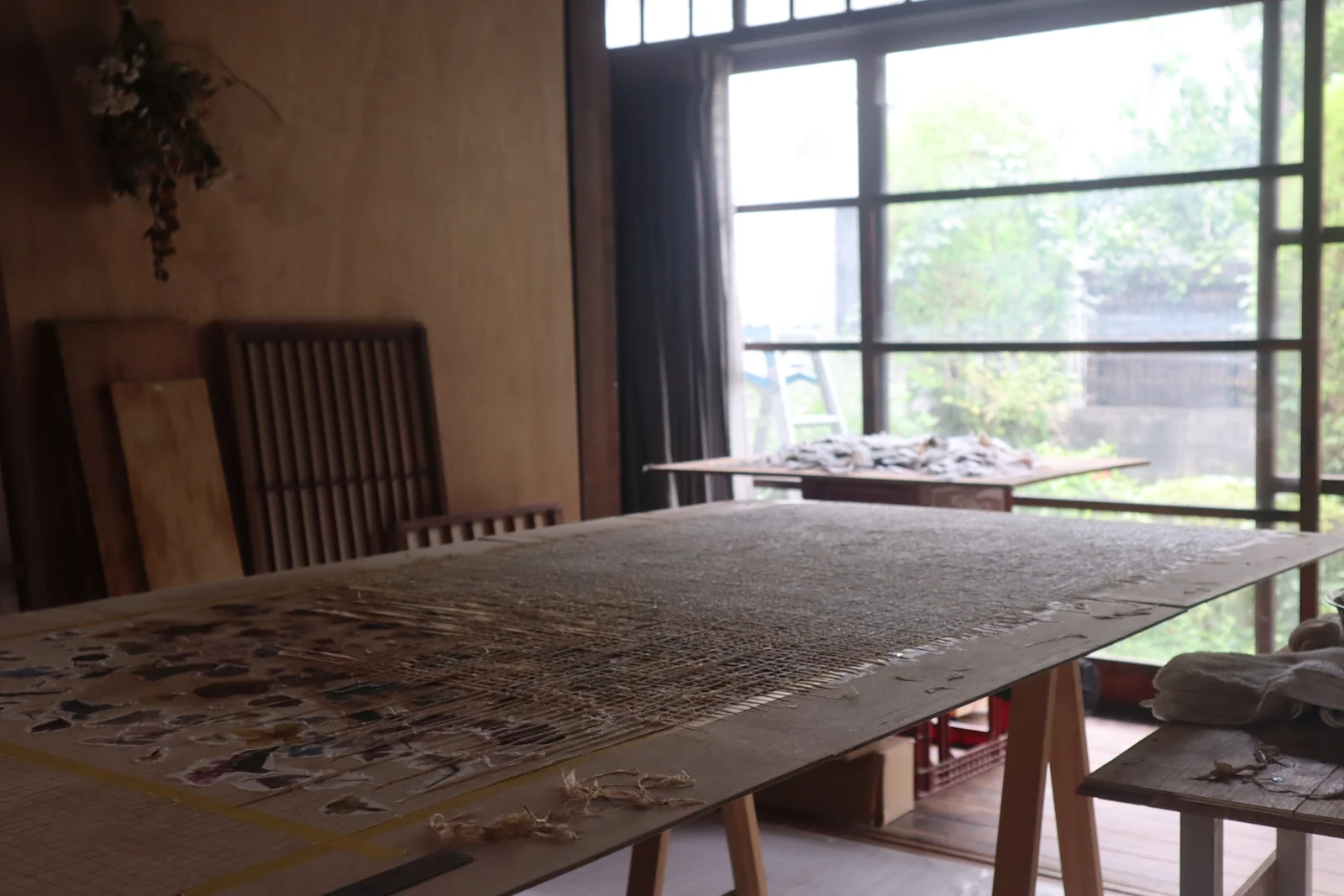
Memory operates in the work in a similar way. Memory is not depicted through image or narrative, nor translated into symbolic motifs. Instead, it is embedded in the material process itself. Fibers carry traces of contact; layers accumulate the marks of time, handling, and environment. Fragments from daily life and remnants connected to others are incorporated not as representations of what is absent, but as active participants in the work’s formation. Memory here is neither recalled nor illustrated—it arises through material continuity.
This approach allows the work to engage with loss and absence without resolving them into meaning or consolation. What has been lost does not return, yet continues to shape what remains. Absence persists within presence, not as an image of what is gone, but as a structural condition. In this sense, the work engages mourning not as an event to be overcome or a state to be escaped, but as a temporal mode that continues to operate. The work does not seek healing through completion; instead, it sustains a space where what is missing remains influential.
The body, though often not directly depicted, is implicit throughout the practice. Papermaking is a bodily process involving repetitive gestures, pressure, balance, and attention. The resulting works register these actions without recording them literally. They bear the imprint of touch and labor while resisting narrative fixation. The body appears not as an image, but as a condition of making—embedded within the structure of the work itself.
Through these material and conceptual strategies, Hanzawa proposes that human existence is neither autonomous nor fully determined, but emerges through ongoing entanglement. Like paper—porous, layered, and vulnerable to change—life unfolds through accumulation, dissolution, and the quiet persistence of what has passed through. The works hold together agency and exposure, presence and absence, intention and unpredictability, without resolving their tension. In doing so, they offer a way of thinking and being that remains attentive to uncertainty and open to transformation.